RL Roof Leak Repair San Marcos roofing · San Marcos, TX

Roofing

Roof Leak Repair in San Marcos, TX

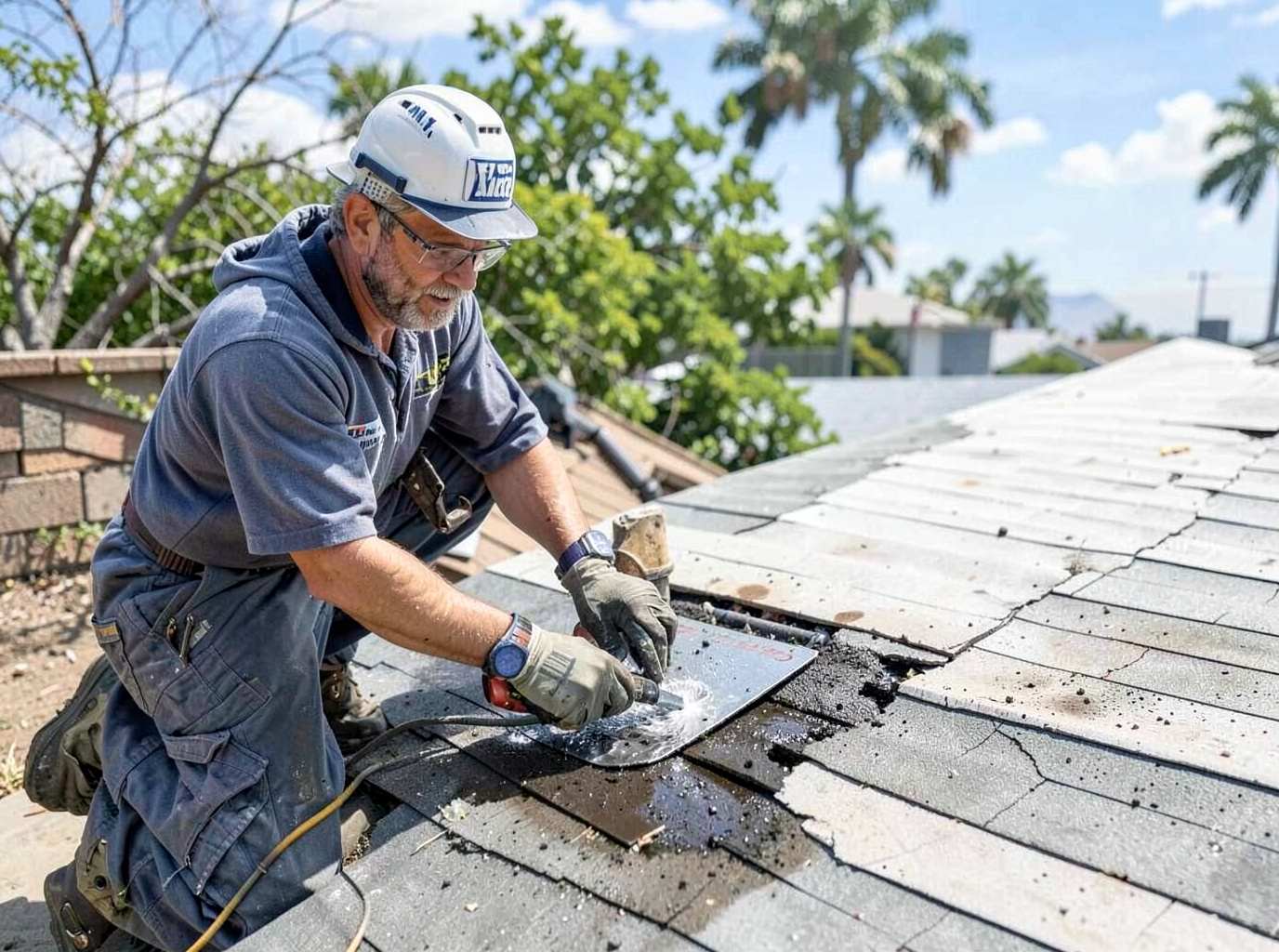
Roof leak repair in San Marcos, TX starts with finding the exact point where water enters, then fixing that failed detail such as a flashing joint, valley, pipe boot or cracked shingle. Many leaks do not need a new roof. The local providers this site connects you with can trace the path and repair the source.

Focused leak fixes for San Marcos roofs strained by humid weather across Hays County.

  • ✓Based at 2526 I-35 N Frontage Rd
  • ✓Hays County Coverage
  • ✓The providers Connect You With Local Providers

San Marcos homes in neighborhoods like Downtown and the Texas State University area often feature older asphalt shingle roofs that develop leaks where flashing meets chimneys or vents. The humid subtropical climate brings repeated summer downpours that push water under lifted shingles, especially on south-facing slopes exposed to intense heat. Pros you are connected with trace leaks by lifting individual shingles rather than relying on interior stains alone, because moisture from the nearby San Marcos River keeps attic humidity high and masks active entry points.

Blanco Gardens properties sit on slightly lower terrain where runoff from surrounding hills pools against foundations during heavy rains. This creates edge cases where leaks appear at eaves or valley lines even when the main field looks intact. Repair work here frequently requires replacing rotted decking boards that have absorbed water over multiple seasons, and providers check for mold growth before sealing because the constant moisture load in Hays County accelerates wood decay compared to drier spots farther west toward Kyle.

Homes closer to Wonder World Cave or along routes to New Braunfels and Austin experience more thermal expansion cycles from hot summers, which loosens nail seals around pipe boots and skylights. The pros you are connected with based at 2526 I-35 N Frontage Rd carry extra underlayment patches sized for common 1960s-1980s construction found in these corridors. They also verify that any new sealant meets local wind-driven rain standards without assuming newer code requirements apply to every structure.

Repair providers avoid full roof replacement recommendations unless multiple leaks trace to widespread granule loss from UV exposure. Instead they focus on isolating each penetration, cleaning the area, and installing step flashing that integrates with existing courses. This approach limits disruption for residents near Aquarena Center who need quick access restored after storms move through the county.

Technician insight

In San Marcos, the thing that catches most people out with Roof Leak Repair is how the combination of hot summers and San Marcos River humidity keeps older decking in Downtown and Texas State University area homes damp long after the rain stops, so a surface patch often fails within one season if the rotted wood underneath is not addressed.

Blanco Gardens eave leak after summer storms

Water stains appeared on ceilings in a 1970s home near Blanco Gardens following repeated heavy rains. The pros you are connected with traced the entry to lifted valley flashing where runoff collected against the foundation. They replaced the rotted decking section, reinstalled integrated flashing, and verified the fix held during a follow-up test.

How does roof leak repair work in San Marcos?

  1. 1

    Initial Assessment

    The pros you are connected with inspect the roof from both exterior and attic to map active leaks without relying on guesswork.

  2. 2

    Leak Isolation

    They lift shingles and check flashing, valleys, and penetrations common to San Marcos housing stock while noting any river-influenced moisture patterns.

  3. 3

    Material Repair

    Damaged sections receive new underlayment, flashing, and sealant matched to the existing roof type before re-securing shingles.

  4. 4

    Final Verification

    A water test confirms the repair holds, followed by cleanup of any debris around the property in Downtown or Blanco Gardens.

What factors shape your repair invoice?

Cost depends on roof access, number of leak points, and any decking replacement needed; ranges shift with storm frequency in Hays County.

Roof Leak Repair San Marcos — roofing in San Marcos

Good to know

Why does the stain appear away from the actual leak?

Water rarely travels straight down from the point where it enters the roof. It follows the slope of the decking, runs along rafters and wood framing, and tracks down the path of least resistance until it reaches a ceiling joint, a light fixture or a wall plate. A stain can therefore show up several feet from the true entry point, which is why guessing based on the ceiling alone often leads to repairs in the wrong place.

This matters in San Marcos because the local housing stock is varied. The median year a structure was built is 2001 according to ACS 2020–2024 cost discussions, and 39.6% of housing units are single-family, while 57.8% sit in buildings of two or more. Attic layouts, ceiling types and roof pitches differ across those homes, so the same leak can travel differently from one house to the next.

Storm-driven rain makes this harder. Wind can push water sideways under shingles and up under flashing, so the wettest spot in the attic may sit well away from the nearest shingle that looks damaged. Local providers start from the stain and work backward toward the roof rather than starting from a shingle and assuming it caused the stain.

What are the most common leak sources on San Marcos roofs?

Leaks usually begin at a detail rather than in the middle of a shingle field. Penetrations are common suspects: plumbing vents, exhaust fans, skylights and chimneys all rely on sealant, flashing and a pipe boot or curb to keep water out. When a rubber boot cracks or its collar lifts, water runs down the pipe into the attic and can soak insulation before anyone sees a ceiling mark.

Valleys come next. Where two roof planes meet, water concentrates, so worn valley metal, lifted shingle edges or debris buildup can let water pass under the covering. Step flashing where a sloped roof meets a wall, and counter-flashing at chimneys, are also frequent sources, especially where sealant has dried and split.

Field shingles can fail too, particularly after hail. Cracked, torn or missing shingles expose the underlayment, and granule loss shortens the time that layer can resist water. Decking damage from long-term moisture is a sign the leak has been running for a while, and the attic often shows it first.

What sub-services fall under roof leak repair?

Roof leak repair is a group of targeted jobs rather than one standard task. Common sub-services include flashing repair and replacement, pipe boot and penetration resealing, valley metal repair, individual shingle replacement, underlayment patching and attic decking repair where moisture has softened the wood. Each one addresses a specific failed detail that local providers identify during the trace.

Sub-services can also cover gutter and downspout corrections where overflowing water runs behind fascia or onto a roof edge, and ridge or hip cap resealing where wind has lifted the top course. These are narrower jobs than a re-roof, and they are usually chosen because the rest of the roof is still sound.

Matching is a common question. Existing shingles may be discontinued or weathered differently from the rest of the roof, so a provider may explain how a close match or a repaired section will look once installed. Where matching is limited, the homeowner should hear that plainly before any work is scheduled.

How is a leak traced before repair?

A proper trace moves from inside to outside. Start in the attic with a flashlight and look for dark or stained decking, wet insulation, rusted nail tips, water tracks along rafters and staining near penetrations. Mark the wettest area and note whether it lines up with a vent, valley or wall. Dry decking with a stain above it can point to an old leak that has since stopped.

Next, examine the roof in daylight. Check the flashing around each penetration, the condition of the valley metal, the sealant at step flashing and the shingles directly above the marked area. Look for cracked boots, lifted edges, exposed nails and granule loss. Document findings with photographs before any material is removed so the repair can be compared with what was seen.

Testing with a controlled water run can confirm the source. A helper runs a hose on one section at a time, starting low and moving upslope, while someone watches the attic. This method isolates the entry point without guessing. Note when the stain appears, because a leak that shows only during heavy wind-driven rain points to a different detail than one that appears after every rain.

What is included in a roof leak repair?

A complete roof leak repair usually includes the inspection and trace, the repair of the failed detail, and a check of the surrounding materials that were affected by the water. The local providers this site connects you with should describe the scope in writing before any work begins, including which components will be replaced and which will be left in place.

The typical scope has several parts: removing damaged shingles or flashing carefully, replacing or resealing the failed component, repairing or replacing underlayment underneath, and securing the surrounding covering so water does not reach the new work. Attic work may include drying decking, replacing stained insulation where needed, and confirming the area is dry after rain.

Cleanup and a final walk-through should be part of the job. Debris from nails, sealant and old flashing should come off the roof and out of gutters, and the homeowner should be shown the repaired detail and the attic area. Photographs of the before and after condition help with future maintenance and with any insurance or record-keeping questions.

When does a leak mean replacement instead?

A leak does not automatically mean a full replacement. A repair is usually the right answer when the leak traces to one detail, the decking is sound, and the surrounding shingles are still flexible and intact. Replacement becomes worth considering when leaks repeat in several places, when decking is soft across large areas, or when the covering has lost its ability to shed water across much of the roof.

Age and condition matter. The shingle field may be weathered, brittle or heavily granule-depleted after many seasons of sun and rain. In a region with heavy spring hail, a roof with repeated hail damage across multiple slopes may need a broader assessment than a single repair can address.

Local conditions add weight to the decision. Annual precipitation averages about 35 inches, and May is the wettest month at about 3.8 inches on average. Flash flooding is the most common reported hazard around San Marcos in NOAA records since 1996, mostly in June and May. A roof that is already compromised faces more risk in those months, so the choice between a repair and a replacement should be made before the next wet season rather than during it.

Roof Leak Repair — FAQs

Still have questions? We're happy to talk it through.

+ How do roof leaks differ in San Marcos compared to nearby Austin?
Higher humidity from the San Marcos River keeps moisture trapped longer, so leaks often involve more decking rot than in drier parts of Travis County.
+ Can leaks near the Texas State University area be fixed without replacing the entire roof?
Most isolated leaks around vents and flashing are repaired sectionally unless widespread granule loss from summer heat affects the whole surface.
+ What weather patterns most affect roof leaks in Hays County?
Hot summers followed by intense downpours push water under lifted shingles faster than in cooler regions, especially on older homes in Downtown San Marcos.
+ Do homes near Wonder World Cave see more valley leaks?
Slight elevation changes and runoff patterns there increase water volume at valleys during storms, requiring extra attention to flashing integration.

Is a leak always where the stain is?

No. Water can travel along rafters, decking and framing before it shows on a ceiling, so the stain marks where water landed rather than where it entered. Tracing the path from the attic outward usually finds the real entry point, often at a penetration or flashing joint. Local providers confirm the source before any repair is scheduled.

Should I contact my insurer before a repair?

Many homeowners ask this after storm damage. Photograph the interior and exterior damage with dates before anything is changed, keep records of any temporary protection, and ask ythe insurer what documentation it needs. Local providers can describe the roof condition in writing, but they do not decide coverage.

Can a newer home still have roof leaks?

Yes. Newer roofs can leak at flashing, penetrations, valleys and sealant joints, and installation problems or storm damage can affect any roof regardless of age. A recent roof still needs a proper trace if water appears after a storm, because the cause is a specific failed detail rather than the roof's age.

Need Roof Leak Repair in San Marcos, TX?

Talk to a local roof leak repair company serving San Marcos and nearby neighborhoods.