Good to know
How is hail damage checked without guessing?
Built along the Balcones Escarpment, San Marcos is often nicknamed Flash Flood Alley, a place where storms rolling off the Hill Country meet moisture from the Gulf. Hail is a recurring part of that pattern. Hail one inch or larger hit in or near San Marcos on 15 days between 2016 and 2025, and three of those days produced hail two inches or larger. The most recent one-inch hail day in that record was 22 May 2025, at 2.00 inches. On 9 May 2024 hail reached 3.00 inches, and the largest hail since 1996 was 4.50 inches on 16 March 2000.
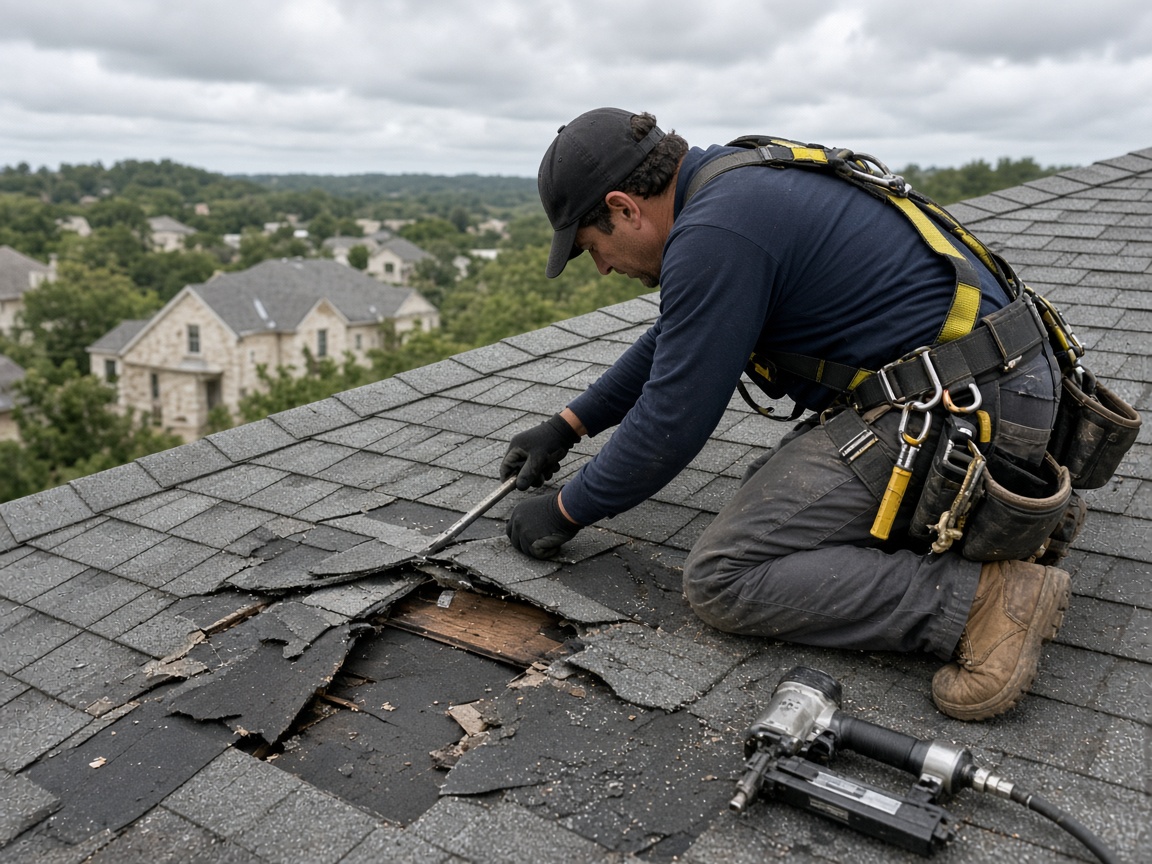
Hail damage is hard to judge from the ground because asphalt shingles can be bruised beneath an intact surface. A careful check starts on the roof with a systematic walk, looking for soft spots where a shingle feels cushioned, granules knocked loose, dark bruises or fractured mats, and any impact pattern that repeats across the same slope. Comparing the windward and leeward slopes helps show whether the marks match the direction of the storm. The pros you are connected with can use this same method so the findings rest on evidence rather than a quick look from the driveway.
Hail does not strike every slope evenly, and each roofing material shows impact differently. Asphalt and architectural shingles show bruises and granule loss, metal shows dents and scuffs, and concrete or clay tile can crack or chip. Slate can split. A written record of each slope, with the number and size of marks found, gives a clear basis for the next decision about repair or replacement.
What do soft metals and gutters reveal after a storm?
Soft metals are often the first place hail leaves a readable record. Ridge caps, vent hoods, drip edge, step flashing, valley metal and gutters all dent or split when stones strike them. Dents on a downspout or a vent cap can show the size and direction of hail even when the shingles look normal. Because these parts sit at the edges and transitions of the roof, a dent in flashing or a split seam can open a path for water.
Gutters offer another check that is easy to do from the ground. Look for dimples along the trough, granules collected in the gutter or at the downspout outlets, and sections that are loose or separated. A heavy load of asphalt granules after a storm often means the shingle surface has been worn or fractured. Downspouts that are bent or pulled from their brackets may also show that wind or hail reached the roof edge.
Soft metal and gutter findings should be read together with the roof surface and the attic. A dented vent cap above a stained ceiling, for example, points to a penetration that needs closer attention. Flash flooding is the most common reported hazard around San Marcos in NOAA records since 1996, mostly in May and June, so debris-clogged gutters can also add water load at the eaves. Clearing and checking outlets belongs in a complete storm record.
Which storm damage is functional and which is cosmetic?
Functional damage affects how the roof keeps water out. Examples include shingles that are cracked through, punctured, or lifted so they no longer lie flat, exposed underlayment, displaced or split flashing, cracked pipe boot collars, loose ridge caps and fractured tile or slate. Granule loss counts as functional once it exposes the mat or leaves the asphalt beneath open to sun and water.
Cosmetic damage changes appearance without immediately affecting water shedding. Shallow dents in a metal panel that is still sealed, light spatter marks on shingles where the surface remains intact, or minor scuffs on a painted vent may not need repair on their own. A cosmetic mark should still be recorded, because it documents the storm and helps show the condition of the roof if conditions change later.
The distinction matters for decisions about scope. A roof with several functional defects in one area may call for targeted repair, while widespread functional damage across most slopes may point toward replacement. Local providers can explain which marks fall into each group, and they should show the evidence behind each finding rather than labelling the whole roof as damaged or undamaged without support.
What should be photographed after a San Marcos storm?
Photographs taken before anyone climbs onto the roof are useful for documentation and for safety. Start from the ground with wide shots of each elevation and the roofline, then take close-ups of gutters, downspouts, vents and any visible shingle damage. Include a scale reference such as a coin or ruler in close-up images so the size of a dent or patch of granule loss can be judged later.
Record the interior as well. Photograph ceiling stains, damp drywall, bubbling paint and any wet insulation in the attic, using a flashlight to show the underside of the decking where possible. Date-stamped images tied to the storm date help connect the damage to the event. The NOAA Storm Events database lists reported storms by date and location, so checking the record for San Marcos can help match ythe photos to the right event.
Keep the original files, and do not delete earlier photos when new ones are taken. A simple log that lists the date, the room or roof area, and a short description of each photo makes the record easier to share with the pros you are connected with and with anyone else examining the damage. Avoid walking on a hail-damaged or wet roof, since fragile shingles and tile can crack underfoot and create new damage.
What is included in storm damage roof repair?
A complete storm damage repair usually starts with a documented assessment rather than immediate work. The assessment covers the roof surface slope by slope, along with flashing and transitions, penetrations, vents, gutters and downspouts, and the attic side where water would show up. The result should be a written list of functional findings, cosmetic findings noted separately, and a clear recommendation for each area.
Repair work normally includes replacing individual damaged shingles or tiles, resealing or replacing damaged flashing, correcting lifted tabs, repairing or replacing pipe boots, and securing ridge caps or drip edge. If a section is open to weather, a temporary dry-in may be placed first so the interior stays protected until the permanent repair is made. Gutter and downspout repairs are often grouped with roof work because they handle the water that leaves the roof.
Cleanup and final checks are part of the process. Debris from the roof and gutters should be removed, and repaired areas should be checked after the next rain to confirm the fix holds. Homeowners who plan to share findings with an insurer should ask for the photo record and written notes at the end of the job, since those documents show what was found and what was repaired.
Which storm damage roof repair sub-services are available?
Storm damage roof repair covers several sub-services, and the pros you are connected with may offer some or all of them depending on the roof. Common sub-services include hail damage documentation, individual shingle or tile replacement, soft metal and flashing repair, ridge cap and drip edge repair, pipe boot and vent resealing, gutter and downspout repair, and attic leak tracing after a storm.
Some sub-services are tied to specific materials. Asphalt and architectural shingle roofs usually call for shingle-level replacement and matching where possible. Standing-seam and exposed-fastener metal roofs may need panel, seam or fastener work. Concrete or clay tile can require careful removal of cracked units, and slate repairs call for specialist handling. Low-slope systems such as TPO need seam and flashing checks rather than shingle work.
Some sub-services involve permanent changes and need extra planning. A local roofing source cites an exemption added by Ordinance 2023-09 under which replacing a roof covering does not need a permit unless the new covering is heavier than the existing one, so shingle-to-shingle work falls under that exemption while concrete or clay tile or slate would be permitted work. Confirm the current ordinance wording with City of San Marcos Planning & Development Services before ordering material. Properties in the seven local historic districts also need a Certificate of Appropriateness for changes in design, material or outer appearance beyond ordinary repair and maintenance.
Still have questions? We're happy to talk it through.