RL Roof Leak Repair San Marcos roofing · San Marcos, TX

San Marcos, TX Coverage

Roof Leak Repair in Kissing Tree, TX 78666

Roof repair in the Kissing Tree area of San Marcos, Texas usually starts by tracing the leak to its source, which is often a flashing, penetration or valley rather than the whole shingle field. Kissing Tree is a 55-plus resort-style community on the city's south side. Independent local providers can inspect, document and repair the failed detail.

Roof leak repair for Kissing Tree homes in San Marcos. Pros handle hot summers, humidity and drainage near the river and I-35.

  • ✓Based at 2526 I-35 N Frontage Rd
  • ✓Hays County Coverage
  • ✓The providers Connect You With Local Providers

Kissing Tree sits off Wonder World Drive in San Marcos with single-story homes built for active adults. The humid subtropical climate brings hot summers that expand roofing materials and sudden downpours that test every seam. The pros you are connected with reach these streets quickly from the I-35 frontage road location and know how the neighborhood's drainage patterns and tree cover affect leak locations on tile and asphalt roofs.

Residents along Kissing Tree Boulevard and nearby loops face leaks where wind-driven rain meets older flashing around skylights and vents. Proximity to the San Marcos River adds moisture that can linger under eaves. The pros you are connected with inspect attics and low-slope sections common in this community and match repairs to the actual exposure on each block rather than generic fixes.

Around Kissing Tree

Neighborhoods served:

  • 📍Kissing Tree Boulevard
  • 📍Kissing Tree Golf Course
  • 📍Kissing Tree Parkway
  • 📍Kissing Tree Drive

Roof Leak Repair in Kissing Tree — Local Notes

  • •Single-story construction in Kissing Tree means most leak investigations start from the attic rather than upper floors.
  • •Hot summers cause repeated expansion on asphalt shingles and tile, loosening nails and sealant around penetrations.
  • •Low spots near the river side of the neighborhood hold water longer after storms, increasing risk at valleys and eaves.
  • •Direct access from the I-35 frontage allows quick arrival without crossing the university or downtown traffic.

Good to know

Can newer Kissing Tree roofs still leak?

Yes. Roof age is only one factor. Flashing at chimneys and vents, pipe boots, valleys and the seals around skylights can fail on a roof of any age, and installation details often decide whether water gets in more than the calendar does. Build dates vary from property to property, so check the permit and installation records for ythe own home rather than assuming a newer roof is leak-proof.

A ceiling stain after a storm does not always sit directly under the entry point. Water can run along rafters or decking before it shows on the drywall, which is why a stain alone is a weak guide. Start on the attic side and look for damp insulation, darkened decking, or water tracks on the underside of the sheathing near penetrations and valleys. Those clues point toward the detail that failed.

Local conditions matter here too. San Marcos sits in Texas Hill Country where storms arrive quickly, so a small opening in flashing can let water in during one heavy rain and stay hidden until the next. A roof that looks fine from the ground can still have a failed seal that only shows up in a closer inspection.

What should Kissing Tree homeowners inspect after spring hail?

Hail is a real factor in San Marcos. NOAA-based hail records summarized by Hail Almanac show hail 1 inch or larger in or near San Marcos on 15 days from 2016 to 2025, and 2 inches or larger on 3 of those days. The most recent 1-inch day in that record was 22 May 2025 at 2.00 inches, and 9 May 2024 brought hail up to 3.00 inches. Across 1996 to 2025, days with 1-inch hail peak in April, so spring is the season to check closely.

Start with the shingles. Look for bruising, cracked mats and granule loss that exposes the asphalt, and note whether the impacts are scattered across all slopes or concentrated on one side. Then check soft metals such as vent caps, drip edge, flashing and gutters for dents or split seams. Photograph each finding with the date tied to the storm so the record is clear.

Not every mark is damage that needs repair. Functional damage includes exposed mat, cracked or lifted shingles, displaced flashing and punctured metal. Cosmetic marks that do not affect water shedding are a different category. The pros you are connected with can walk the roof, separate hail impacts from normal wear, and explain which findings affect performance.

Repair or replacement: what decides it in a 55-plus community?

The decision usually turns on fthe things: the condition of the covering, how many separate leak points exist, whether damage is isolated or spread across the roof, and what the attic shows. In a 55-plus resort-style community, many property holders also weigh how much disruption a project causes and how long they plan to stay in the home. A targeted repair that fixes one failed detail is often the first option to discuss when the rest of the roof is sound.

Replacement becomes the more serious topic when leaks appear in several unrelated areas, shingles are brittle or heavily granule-depleted, decking feels soft or shows rot, or hail has damaged most slopes. Ask the providers to show the evidence slope by slope and to explain why a repair would or would not hold. A clear written scope lets you compare options calmly instead of reacting to a single stain.

Which local conditions shape roofs in Kissing Tree?

San Marcos has a hot summer and a mild winter. The average high in August is 95°F and the average low in January is 41°F. Heat dries and hardens sealants and asphalt over time, which can open small gaps around penetrations and flashing. Precipitation peaks in May, with an average of 3.8 inches that month, and the annual average is about 35 inches based on NOAA 1991 to 2020 normals.

NOAA records since 1996 list flash flooding as the hazard reported most often around San Marcos, with most events falling in May and June. The city sits on the Balcones Escarpment in what is often called Flash Flood Alley, where Hill Country storms meet Gulf moisture. That mix brings large spring hail, damaging straight-line winds and heavy rain. The 2015 Memorial Day flood, when the San Marcos River crested at 43.08 feet, is a reminder of how quickly water moves through the area. Clear gutters, sound downspouts and intact flashing help keep runoff moving away from the roof edge and the house.

Which roofing services are available in Kissing Tree?

Homeowners in Kissing Tree most often look for leak repair, storm damage checks, emergency temporary protection and, when needed, full replacement. The pros you are connected with work across the common San Marcos roofing systems, including asphalt and architectural shingles, standing-seam and exposed-fastener metal, concrete and clay tile, slate, and TPO or other low-slope systems. Each material has different repair methods, so the right provider depends on what is already on the roof.

Underlayment, flashing, valleys, pipe boots and decking are the details most often involved in leaks. A provider who explains how each one is checked, and how it connects to the attic, gives you more confidence in the repair plan than a general promise of coverage.

What should Kissing Tree homeowners do first when water comes through the ceiling?

Protect people and belongings first. Move furniture and electronics away from the wet area, place a container under the drip, and switch off nearby light fixtures if water is reaching them. Do not climb onto a wet or stormy roof. Photograph the ceiling stain, the drip path and any water on the floor before you clean anything, so the record matches the storm date.

Next, contact local providers who can limit further entry. Until the leak source can be pinpointed in daylight, a temporary dry-in or tarp over the opening keeps water out of the interior. The permanent repair should follow once the failed detail is found, usually after a check of the attic side and the roof surface together.

How does a roof visit work in Kissing Tree from start to finish?

A typical visit begins with a description of the symptoms: where the stain is, when it appeared, and whether it follows rain or wind. The provider then checks the attic for moisture, staining and daylight around penetrations, followed by a roof walk to inspect shingles, flashing, valleys and the sealant at each penetration. Photos are taken throughout so the findings can be recorded after the visit.

After the inspection, the provider should explain the likely cause, the repair steps and any options for replacement. If the job involves changing the roof covering, ask about permits before any material is ordered. Under City of San Marcos Ordinance 2023-09, the 2021 International Residential One and Two Family Code and the 2020 National Electric Code took effect on 1 April 2023. The city's permit rules, including the roof covering question, are set out by Planning and Development Services, so confirm the current position with the city before work begins.

Kissing Tree is not among the seven local historic districts named in the sourced material, which are Hopkins Street, Burleson Street, Lindsey-Rogers, Dunbar, Downtown, San Antonio Street and Belvin Street. Still, confirm boundaries with the city if there is any doubt about the property's location.

What is included in a roof leak repair in Kissing Tree?

A typical roof leak repair includes a documented attic-side inspection to find the wet area, a roof-surface inspection at the matching location, and a repair to the failed component. That component is often flashing around a chimney or vent, a pipe boot, a valley, or a section of damaged underlayment. Sealant work is included only where it is appropriate for the material. The provider should also check nearby details that might fail next.

A complete record usually includes dated photographs of the damage and the repaired area, a short written summary of the cause, and notes on any hail or wind marks found during the visit. Ask the provider to state in writing what the repair covers and what it does not, so there are no surprises later.

Roof Leak Repair in Kissing Tree — FAQs

Still have questions? We're happy to talk it through.
+ Do homes in Kissing Tree need different leak repairs than older neighborhoods in Hays County?
Many Kissing Tree roofs are newer single-story builds with tile or architectural shingles. Repairs focus on attic access, expansion joints from summer heat, and drainage near the river edge.
+ How do summer storms affect roofs along Kissing Tree Boulevard?
Hot humid days followed by heavy rain can force water under lifted shingles and around vents. The pros you are connected with check these spots first when called to the neighborhood.
+ Is access easy for roof work in the Kissing Tree community?
Yes. Streets connect directly to Wonder World Drive and sit close to the I-35 frontage, so equipment reaches most homes without crossing campus or downtown San Marcos.

Where do roof leaks usually start in Central Texas homes?

Roof leaks in Kissing Tree often start where the roof is interrupted rather than across open shingle fields. Flashing around chimneys, vent pipes, skylights, and wall intersections is a common source, because the sealant and metal strips there expand, contract, and weather over time. Valleys, where two roof planes meet, carry more water than any other area and can wear faster when debris builds up.

Water rarely travels straight down. It can follow a rafter or nail line before showing a stain several feet away, so the drip on the ceiling may not mark the entry point. Checking the attic during or just after rain can help. Look for darkened wood, damp insulation, or staining on the underside of the roof deck.

Central Texas weather adds stress. Summer heat can dry out caulk and asphalt until it turns brittle, while heavy wind-driven rain pushes water under edges that were already lifting. Over time, these small openings add up.

The providers we connect you with typically trace the water path from the ceiling and attic back to the roof surface, then check flashing, penetrations, and valleys before recommending a repair. Asking them to show you the problem areas helps you understand the scope.

How should a roof leak repair be scoped before work begins?

A useful repair scope starts with a clear list of what was found and where. Each leak source should be matched to a specific area on the roof, such as a cracked boot around a plumbing vent, a lifted shingle course near a valley, or deteriorated step flashing along a sidewall. Vague descriptions make it hard to compare options.

Scope usually depends on the roofing material, the age of the surrounding shingles, and whether matching materials are still available. A patch that is sound on one slope may not blend with older granules or a different shingle profile on another. Repair work on a small penetration is often far narrower than work on a damaged valley, which may require removing and reinstalling several courses.

Ask the providers you hear from to explain which items are repairs and which are recommendations for later. A repair fixes an active leak or failed component. A recommendation might address aging sealant on a vent that still performs or a shingle layer nearing the end of its service life. Keeping those categories separate makes it easier to decide what to address now.

Before work starts, confirm the scope in writing, including the areas to be repaired, the materials expected, and how any interior damage will be handled.

What happens during a roof leak repair appointment in Kissing Tree?

A roof leak repair appointment usually focuses on the area where water was reported, but a careful provider will look at the surrounding roof as well. The work often starts with a walk around the property to note roof pitch, access points, and any visible damage to gutters, fascia, or siding that may indicate where water has been traveling.

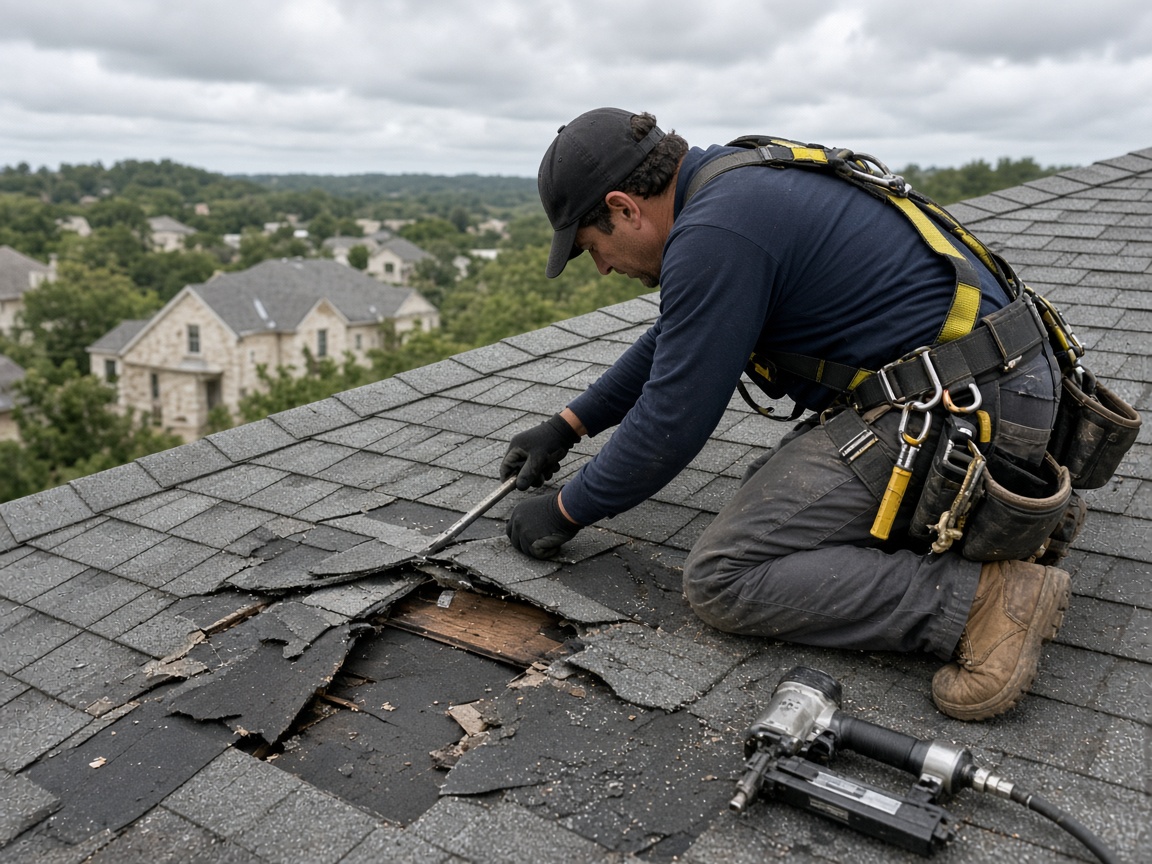
Safety is a major part of the visit. Roof surfaces can be slippery after rain, and steep pitches call for fall protection and secure ladder placement. Work on dark shingles during Texas summers also means managing surface heat, which can make asphalt soft and footing less predictable through midday hours.

Once the source is identified, the provider may check adjacent flashing, sealant, and fasteners so the repair addresses related wear, not just the single symptom. Materials chosen for the repair should match the existing roof where possible, and the work area is usually cleaned of nails, granules, and debris before the visit ends.

After the visit, ask for a plain written summary of what was repaired, what was observed but not changed, and what to watch after the next heavy rain. Those notes are useful reference points if you later compare options with other providers or need to explain repair history to a buyer.

Can newer Kissing Tree roofs still leak?

Yes. Flashing, pipe boots, valleys and skylight seals can fail on any roof, and installation details matter as much as age. Check the attic for damp insulation or darkened decking, then have a local provider inspect the roof surface at the matching spot.

Does a leak in Kissing Tree always mean the whole roof needs replacing?

No. Many leaks come from one failed detail that can be repaired. Replacement is more likely when leaks appear in several unrelated areas, shingles are brittle or heavily worn, decking is soft, or hail has damaged most slopes.

Do I need a permit to re-roof a home in Kissing Tree?

It depends on the material. The City of San Marcos Ordinance 2023-09 reportedly exempts covering replacement unless the new roof is heavier than the existing covering, which is commonly cited for shingle-to-shingle work. Sources conflict on this point, so confirm the current rule with City of San Marcos Planning and Development Services before ordering materials.

Need Roof Leak Repair in San Marcos, TX?

Talk to a local roof leak repair company serving San Marcos and nearby neighborhoods.